
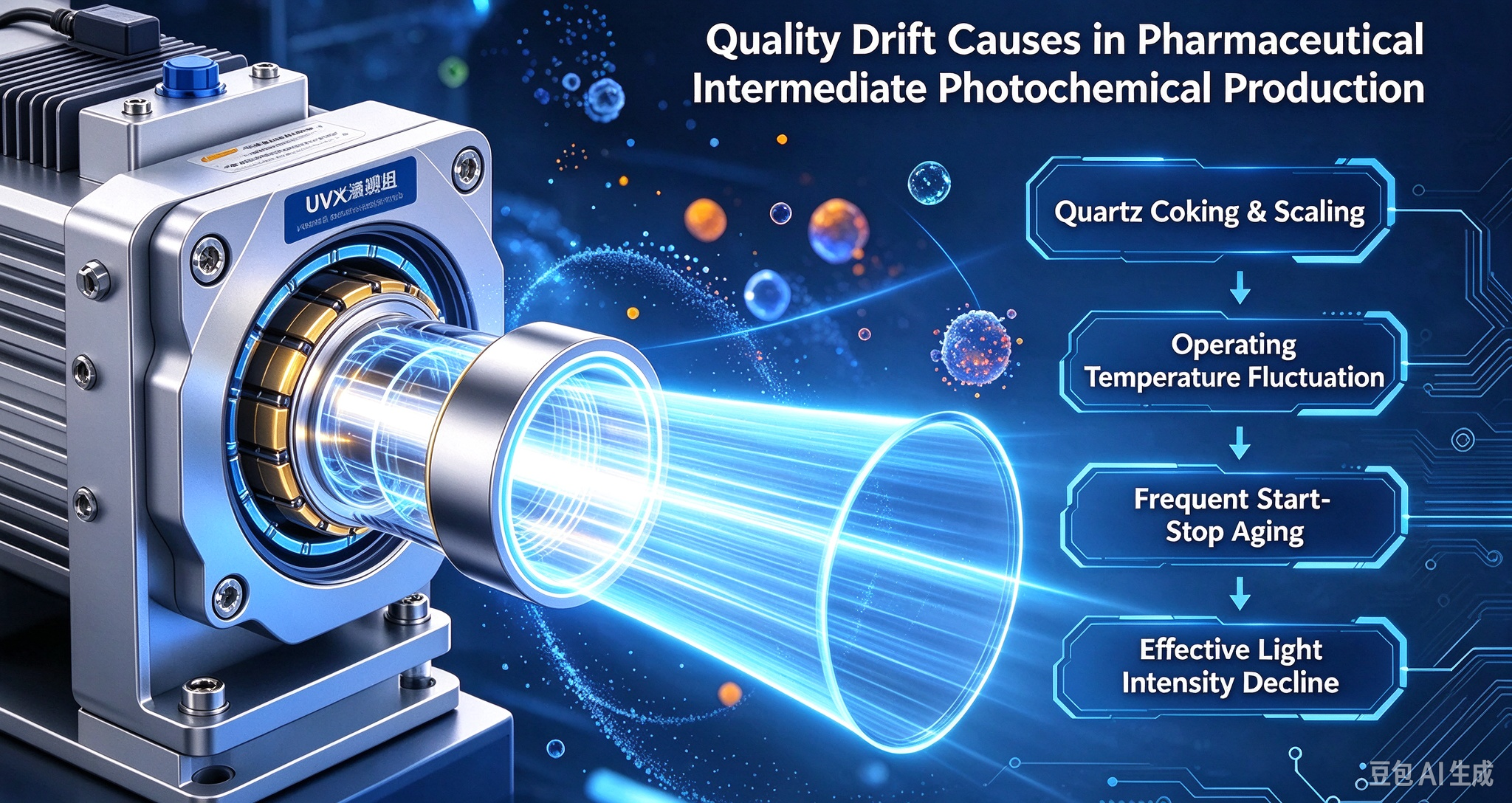
Many pharma‑chemical firms judge photoreactor performance only by factory‑stated lamp power, ignoring hidden UV output losses. These won’t trigger immediate shutdowns, yet they gradually raise impurities and cause batch‑to‑batch quality drift.
⚠️ Key sources of hidden UV decay: ✅ Quartz sleeve fouling & depositsThin invisible layers block UV penetration. Actual light intensity reaching liquid drops, cutting conversion and boosting side‑reactions — often mis‑blamed on raw‑material recipes.
✅ Temperature‑driven spectral shiftUV‑LEDs are highly temperature‑sensitive. Poor cooling causes spectral offset, weakens target reactions and favours unwanted by‑products.
✅ Damage from frequent start‑stop cyclesMulti‑product batch production accelerates component ageing. Lamps often fail far earlier than rated lifetime without intermittent‑mode design.
Most vendors only supply bare lamps, without system‑level engineering matched to your media and operating cycles.
PRST UV accounts for fouling, high heat and cyclic operation at the R&D stage. We deliver practical engineering advice on cooling layout, quartz selection and maintenance schedules, stabilising real‑world UV performance.
If you face unexplained product‑quality drift in photochlorination / photo‑oxidation processes, reach out for technical consultation.
PRST UV: Solve production challenges at the source, not just supply hardware.